
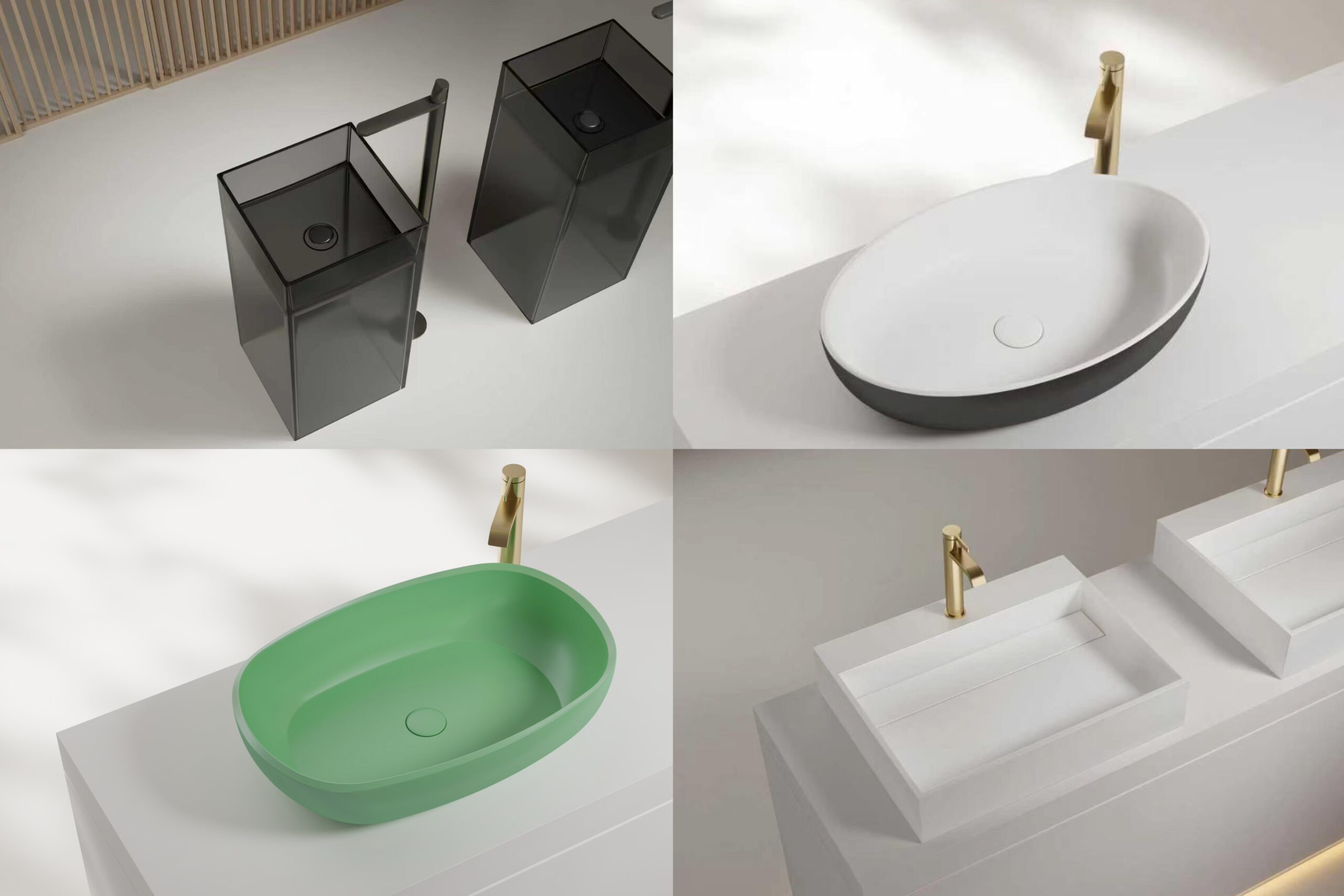
Choosing the right bathroom basin involves more than selecting a shape or color. The basin type, material, size, installation method and overall bathroom design all need to work together.
For homeowners, designers, retailers and sanitary ware buyers, understanding these factors can make it easier to select a basin that fits both the space and the project requirements.
This guide explains the key factors to consider when choosing a bathroom basin, from installation types and dimensions to materials, colors and customization options.
1. Start with the Basin Installation Type
The first step is deciding how the basin will be installed.
Different installation types create different visual effects and have different space and installation requirements. Common options include countertop basins, pedestal basins, wall-hung basins and inset basins. Current bathroom buying guides also emphasize installation type as one of the first factors to consider when selecting a basin.
Countertop Basins
A countertop basin, also called a vessel or above-counter basin, is installed on top of a vanity or countertop.
This style can make the basin a visible feature of the bathroom and works particularly well with contemporary bathroom designs.
Countertop basins are commonly considered for:
- Modern residential bathrooms
- Master bathrooms
- Boutique hotels
- Designer bathrooms
- Custom vanity projects
Because the basin sits above the countertop, the height of the basin and the position of the faucet should be considered together.
Pedestal Basins
A pedestal basin is supported by a matching pedestal underneath.
Instead of being integrated into a vanity cabinet, the basin and pedestal form a complete visual unit. This can give the bathroom a more sculptural and independent appearance.
Pedestal basins can be particularly useful when:
- The basin itself is intended to be a design feature
- A full vanity cabinet is not required
- The project calls for a freestanding visual effect
- A coordinated basin and pedestal design is preferred
GRAESE offers both solid surface pedestal basins and transparent resin pedestal basins, providing different material options for the same type of installation.
Wall-Hung Basins
Wall-hung basins are fixed directly to the wall, leaving the floor underneath open.
This can be useful for compact bathrooms because the open floor area can create a more spacious visual effect and make floor cleaning easier.
However, wall structure, fixing method and plumbing arrangement need to be considered before selecting this type.
Inset and Other Basin Types
Inset, semi-recessed and other basin configurations can also be suitable depending on the vanity design and available space.
The key is to choose the installation type together with the bathroom layout rather than selecting the basin separately.
2. Consider the Available Bathroom Space
The size of the bathroom is one of the most important factors when choosing a basin.
A basin that looks appropriate in a showroom may not work well in a compact bathroom if its depth interferes with the door, shower area or circulation space.
Measure the Available Space
Before selecting a basin, check:
- Available wall width
- Countertop or vanity width
- Countertop depth
- Distance from the basin to other fixtures
- Door and shower clearance
- Plumbing position
For example, a countertop basin requires enough countertop depth to accommodate the basin footprint and leave sufficient space for the faucet and daily use.
Recent basin buying guides similarly emphasize matching basin dimensions with the available vanity and floor plan before installation.
Small vs. Large Bathrooms
For a compact bathroom, a smaller countertop or wall-hung basin may help maintain usable circulation space.
For larger bathrooms, there is more flexibility to consider:
- Larger countertop basins
- Pedestal basins
- Double basins
- Larger vanity combinations
- More distinctive basin shapes
The right size is therefore not simply the largest basin that can physically fit—it should provide a comfortable balance between function, proportion and available space.
3. Check the Basin Dimensions
Basin dimensions are especially important for bathroom projects involving multiple units or customized products.
The key measurements usually include:
- Width
- Depth
- Height
For countertop basins, the overall dimensions should be checked against the vanity or countertop.
Basin Width
The width affects both the visual proportion and available countertop space.
A larger basin can provide a generous washing area, while a compact basin may be more appropriate for powder rooms, guest bathrooms or smaller spaces.
Basin Depth
Depth is particularly important in compact bathrooms.
A basin that extends too far from the wall can reduce circulation space or interfere with nearby fixtures.
Basin Height
Height becomes especially important when comparing different installation methods.
A countertop basin sits on top of the vanity, so its own height needs to be considered together with the countertop height and faucet position.
For project sourcing, always confirm the manufacturer’s actual dimensions and installation requirements rather than relying only on general “standard basin sizes.”
4. Choose the Right Basin Material
Once the installation type and dimensions have been considered, the next step is choosing the material.
Different materials create different visual effects and can suit different project requirements.
Common bathroom basin materials include:
- Ceramic
- Vitreous china
- Natural stone
- Solid surface
- Glass
- Resin-based materials
For projects looking for more design flexibility, solid surface and transparent resin offer interesting alternatives.
5. Why Choose a Solid Surface Basin?
Solid surface is a popular option for contemporary bathroom products because it can be formed into a wide range of shapes and designs.
ISO 19712-1:2008 covers decorative solid surfacing materials and specifically includes solid surface shapes such as bathroom sinks and vanity tops. The standard identifies properties including water resistance, heat resistance, impact resistance, stain and chemical resistance, cleanability and hygiene.
Key Characteristics of Solid Surface Basins
Depending on the specific material formulation and manufacturing process, solid surface basins can offer:
- A smooth contemporary appearance
- Flexible shapes and forms
- Different color options
- Coordinated basin and bathtub designs
- Customization possibilities
- Easy-to-coordinate surfaces for modern interiors
Solid surface is particularly suitable for projects where the basin needs to work as part of a larger bathroom collection.
Solid Surface Basin Applications
Solid surface basins can be considered for:
- Residential bathrooms
- Hotels
- Apartments
- Commercial projects
- Designer bathrooms
- Custom bathroom collections
Click here to explore GRAESE solid surface basins and see different countertop and pedestal designs.
6. Why Choose a Transparent Resin Basin?
If the project calls for a more distinctive visual effect, transparent resin can offer a different design direction.
Unlike an opaque basin, transparent resin can allow light to interact with the material and create a visually lighter or more expressive appearance.
Transparent Resin Color Options
Depending on the design and material requirements, transparent resin basins can be produced in different visual effects, including:
- Clear – highly transparent and colorless
- Translucent – allows light through with a softer appearance
- Tinted transparent – transparent with a subtle color tint
- Colored transparent – transparent with a more visible color
This gives designers more flexibility when developing feature bathrooms or coordinated product collections.
Where Can Transparent Resin Basins Be Used?
Transparent resin basins can be considered for:
- Boutique hotels
- Luxury residential bathrooms
- Designer interiors
- Showrooms
- Hospitality projects
- Feature bathrooms
Click here to explore GRAESE transparent resin basin designs for countertop and pedestal applications.
7. Consider the Basin Shape and Bathroom Style
Once the practical requirements are clear, consider how the basin will work with the overall bathroom design.
The shape of the basin can influence the visual character of the space.
Common Basin Shapes
Depending on the product range, options can include:
- Round
- Oval
- Rectangular
- Square
- Softly curved
- Geometric
- Custom shapes
For minimalist bathrooms, simple geometric forms can create a clean appearance.
For more expressive interiors, curved or sculptural forms can make the basin a stronger visual feature.
If you are also planning the overall bathroom concept, click here to read our guide to the bathroom style trends for 2026.
8. Consider Color and Finish
Color is another important consideration, particularly for projects where the basin needs to coordinate with other bathroom products.
Solid Surface Basin Colors
Solid surface basins can be designed in different color directions, depending on the material and production requirements.
Options may include:
- Pure white
- Colored exterior with white interior
- Full-color designs
- Marble-effect finishes
Transparent Resin Basin Colors
Transparent resin provides another approach, including:
- Clear
- Tinted transparent
- Colored transparent
- Translucent effects
This flexibility can help bathroom brands and designers develop collections that go beyond standard white sanitary ware.
9. Match the Basin with Other Bathroom Products
A basin rarely works alone.
For a cohesive bathroom design, consider how it coordinates with:
- Bathtub
- Vanity
- Faucet
- Mirror
- Shower
- Bathroom accessories
- Wall and floor finishes
Matching Basin and Bathtub Designs
Using the same material, color or design language across the basin and bathtub can create a more consistent bathroom collection.
For example, a solid surface basin paired with a solid surface bathtub can create a unified contemporary look.
Looking for a matching bathtub? Click here to explore GRAESE solid surface bathtubs.
For projects where a lighter material is preferred, click here to explore GRAESE acrylic bathtubs.
10. Consider Customization for Your Project
Standard products may be suitable for many projects, but customization can become important when developing a private-label collection or a project with specific requirements.
Depending on the product and production requirements, customization may include:
Basin Size
Different markets and bathroom layouts may require different dimensions.
Basin Shape
Custom molds can allow brands and designers to develop distinctive shapes for their collections.
Color
Solid surface and transparent resin provide different possibilities for creating customized color collections.
Material
The same general basin design may be developed in different materials to create different visual effects.
For example, a similar shape may be produced as a solid surface basin or a transparent resin basin, allowing the product collection to target different design preferences.
OEM and ODM
For wholesalers, retailers, bathroom brands and project buyers, OEM and ODM support can make it easier to develop products around specific market requirements.
11. Choose a Basin Manufacturer That Fits Your Project
Product design is only one part of a successful bathroom project.
For B2B buyers, the manufacturing partner also needs to be considered.
Important factors can include:
- Manufacturing experience
- Material knowledge
- Mold development capability
- Production consistency
- Quality control
- Customization capability
- Packaging and export experience
- Communication and project support
GRAESE was founded in 1999 and integrates R&D, production and export, with product experience covering solid surface, transparent resin and acrylic bathroom products.
For basin projects, GRAESE provides:
- Solid surface countertop basins
- Solid surface pedestal basins
- Transparent resin countertop basins
- Transparent resin pedestal basins
- Customized basin designs
- OEM and ODM support
This allows different basin styles and materials to be developed according to the needs of different markets and projects.
Bathroom Basin Selection Checklist
Before confirming a basin, it can be useful to check the following:
| Factor | What to Consider |
|---|---|
| Installation type | Countertop, pedestal, wall-hung, inset or other |
| Bathroom space | Available width, depth and circulation space |
| Basin dimensions | Width, depth and height |
| Material | Solid surface, transparent resin, ceramic, etc. |
| Shape | Round, oval, rectangular, geometric or custom |
| Color | White, colored, marble effect, transparent or tinted |
| Faucet setup | Faucet position and compatibility |
| Drain position | Drain location and plumbing requirements |
| Bathroom style | Minimalist, natural, contemporary, luxury, etc. |
| Customization | Size, shape, color and material requirements |
| Supplier | Manufacturing capability and quality control |
How to Choose the Right Bathroom Basin for Your Project
There is no single basin that works for every bathroom project.
The right choice depends on the installation type, available space, dimensions, material, shape, color and project requirements.
For a clean and contemporary design, a solid surface basin can provide flexible shapes, colors and coordinated product options.
For a more distinctive bathroom, a transparent resin basin can introduce transparency, color and light into the design.
Countertop and pedestal configurations provide additional flexibility, while OEM and ODM capabilities allow bathroom brands and project buyers to develop products around specific market requirements.
At GRAESE, we provide solid surface and transparent resin basin solutions, together with OEM and ODM support for wholesalers, retailers, designers, contractors and hospitality projects.